Samsung's HBM4 Shipping Sparks Intense AI Memory Competition for Next-Gen AI Models
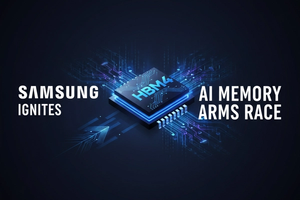
Samsung's HBM4 Shipping Ignites AI Memory Arms Race for Next-Gen Models
Samsung's recent shipment of HBM4 (High Bandwidth Memory) is shaking up the tech landscape, reigniting a fierce competition among memory manufacturers. With this release, Samsung not only aims to reclaim its position in the AI memory market but also sets the stage for next-generation models that promise enhanced performance and efficiency.
Key Takeaways
- Samsung's HBM4 shipments represent a significant technological leap, featuring a 40% improvement in power efficiency.
- The company’s stock surged by 7.6% on Nextrade, reflecting renewed investor confidence.
- HBM4 utilizes low-voltage through silicon via (TSV) technology to enhance performance.
- Competitors are now pressured to accelerate their own advancements in AI memory technologies.
- This development could redefine the standards for memory used in AI applications and data centers.
- Samsung aims to outpace rivals who previously excelled in HBM technology.
- The demand for high-performance memory solutions continues to rise, driven by AI and machine learning applications.
A Shift in the Memory Landscape
Samsung's foray into HBM4 is a strategic move to catch up with competitors who have made significant strides in high-bandwidth memory technology. The previous generation, HBM3, saw rivals like Micron and SK Hynix leading the charge. Concerns over Samsung's competitiveness in AI-driven markets were palpable, but the successful launch of HBM4 has reignited optimism. This isn’t just a technical upgrade; it’s a pivotal moment that could shift market dynamics.
Technical Innovations: What HBM4 Brings to the Table
The standout feature of Samsung's HBM4 is its notable 40% improvement in power efficiency. This is achieved through advanced low-voltage through silicon via (TSV) technology. By optimizing power distribution networks, HBM4 can operate more efficiently, a crucial factor for data centers that handle vast amounts of information.
In practical terms, this means faster processing speeds and lower energy consumption, which is a win-win scenario for companies looking to maximize their AI capabilities while minimizing operational costs. Combined with increased bandwidth, Samsung's HBM4 positions itself as a formidable player in the AI memory arms race.
The Market Reaction: Investors Take Note
The financial market’s response to Samsung’s HBM4 shipment has been overwhelmingly positive. The company’s shares jumped as much as 7.6% on Nextrade, signaling renewed investor confidence in Samsung's technological prowess. This spike in stock value illustrates the market’s optimism about Samsung's ability to lead in high-performance memory solutions amidst fierce competition.
Investors are acutely aware that memory technology is not just a supplementary component; it’s the backbone that supports AI advancements. With organizations increasingly relying on AI for everything from data analysis to autonomous systems, the stakes have never been higher.
Competitive Pressure: Rivals React
Samsung's entry into the HBM4 market puts pressure on its competitors to accelerate their own innovations. Companies like Micron and SK Hynix are now compelled to step up their game, as Samsung’s advancements could redefine performance metrics in AI applications. The race isn't just about speed; it's also about efficiency and sustainability, critical factors for businesses looking to balance performance with environmental concerns.
As rivals scramble to catch up, we can expect a flurry of announcements, upgrades, and new product launches aimed at closing the gap. This competitive landscape could lead to rapid technological advancements, benefiting consumers and businesses alike.
The Future of AI Memory Technology
With the launch of HBM4, Samsung not only asserts its presence in the high-bandwidth memory arena but also sets a new benchmark for what next-generation memory models should aspire to achieve. The demand for high-performance memory solutions will only grow as AI applications continue to expand across industries. From autonomous vehicles to advanced data analytics, the need for faster, more efficient memory is paramount.
As the arms race for AI memory heats up, Samsung's HBM4 could very well be the catalyst that sparks a new era in memory technology. The implications extend far beyond the confines of the tech industry; they touch on energy consumption, operational efficiency, and the overall trajectory of AI development.
Conclusion
Samsung's HBM4 launch is more than just a product release; it's a bold statement of intent in a competitive market. As other players react and innovate in response, we may witness a transformative period in memory technology that shapes the future of AI. For stakeholders—be they investors, companies, or consumers—the message is clear: the race is on, and the possibilities are limitless.