Claude Goes Free with Premium Tools: Anthropic Challenges ChatGPT's Ad Era
Claude Goes Free with Premium Tools: Anthropic Challenges ChatGPT's Ad Era
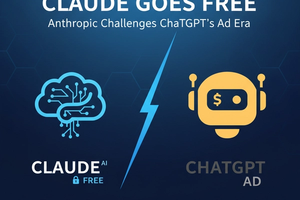
In a bold move, Anthropic has taken a significant step towards redefining the landscape of AI conversational agents. As OpenAI explores monetization through advertisements in ChatGPT, Anthropic has introduced a free version of its Claude AI, complete with premium features. This decision is not merely about offering a no-cost alternative; it's a strategic challenge to the increasing commercialization of AI chatbots.
Key takeaways
- Anthropic announces Claude will be ad-free, directly countering OpenAI's introduction of ads in ChatGPT.
- The free Claude version now includes premium tools, enhancing its functionality without cost.
- Claude aims to provide a more user-friendly experience, focusing on thoughtful interactions rather than ads.
- The ad-free model positions Claude as an attractive option for users seeking a straightforward AI experience.
- Anthropic's move reflects a growing trend in tech where user experience is prioritized over monetization.
- Claude's capabilities include advanced language processing, making it competitive with established models like ChatGPT.
- The shift may influence the broader AI market, as companies reassess the balance between monetization and user satisfaction.
Anthropic's Strategic Shift
Anthropic's decision to make Claude free, especially at a time when competitors are exploring ad revenue, is both timely and strategic. With OpenAI's recent announcements about testing ads in ChatGPT, the landscape of AI tools is shifting towards profitability. However, Anthropic is betting that users will prefer a quality, ad-free experience over one punctuated by advertisements.
The company has positioned Claude as "a space to think," inviting users to engage in meaningful conversations without the distraction of monetization. This philosophy is increasingly resonating with a tech-savvy audience that values integrity and user experience over commercial gain.
Features of the Free Claude Version
The free version of Claude is not just a watered-down iteration of its premium counterpart. It comes packed with advanced features that enhance its usability and effectiveness for a wide range of tasks. Users can now access enhanced language processing capabilities, allowing for more nuanced and context-aware interactions.
For instance, Claude's improved ability to understand context and generate relevant responses is a significant leap forward. This is particularly beneficial for professionals and creatives who rely on AI for brainstorming or drafting content. The tool supports a more collaborative and thought-provoking environment, which is crucial for users who want to leverage AI for serious tasks rather than just casual inquiries.
User Experience and Market Impact
By prioritizing user experience with an ad-free model, Anthropic is challenging the notion that all tech services must be monetized through ads. This could lead to a paradigm shift in how AI tools are developed and marketed. If Claude successfully attracts users who are disenchanted with ad-laden interfaces, it may force competitors to rethink their strategies.
Moreover, the move highlights a growing awareness among tech companies about the importance of user trust and satisfaction. In an era where many platforms are criticized for prioritizing profit over user experience, Claude's model could set a new standard for AI interactions.
Conclusion: A New Era in AI Interaction
As Claude steps into the fray with its free, ad-free approach, it invites a critical conversation about the future of AI. Will users gravitate towards platforms that prioritize their experience over monetization? Anthropic's gamble suggests that many will. In a world increasingly cluttered with ads, the promise of a thoughtful, engaging, and premium experience could redefine user expectations.
The challenge now lies with other AI providers like OpenAI to adapt to this new reality. As Claude gains traction, it may not just reshape its own future, but potentially influence the broader AI market for years to come. For users and developers alike, this evolution presents a unique opportunity to foster a more user-centered approach in the technology we engage with daily.