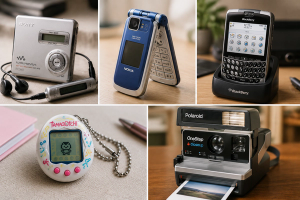
5 Gadgets You Forgot Existed
Technology moves so fast that some gadgets completely disappear from everyday life almost overnight. Devices that once felt futuristic and essential eventually became outdated, replaced by smartphones, streaming services, or newer innovations.
Yet for many people, these forgotten gadgets still bring a strange sense of nostalgia. They represent a time when technology felt exciting in entirely different ways, before everything became combined into one device sitting in our pockets.
Here are five gadgets you probably forgot ever existed.
Key Takeaways
- Many once-popular gadgets disappeared because smartphones replaced them.
- Rapid technological progress can make devices obsolete surprisingly quickly.
- Some forgotten gadgets still hold nostalgic value for older generations.
- Tech trends often reflect the culture and lifestyle of their era.
- Today’s popular devices may eventually disappear too.
1. MP3 Players
Before music streaming apps and smartphones dominated everyday life, MP3 players completely changed how people listened to music.
Devices like the iPod allowed users to carry thousands of songs in their pockets, replacing bulky CD players almost instantly. At the time, having an entire music library on a tiny device felt revolutionary.
People carefully organized playlists, downloaded songs manually, and proudly carried wired earbuds everywhere. While smartphones eventually absorbed that function, MP3 players defined an entire generation of portable entertainment.
2. Flip Cameras
There was a time when small handheld video cameras were incredibly popular for casual recording. Flip Video cameras became especially famous in the late 2000s because they were compact, simple, and easy to use.
Unlike professional camcorders, Flip cameras were designed for everyday people who wanted quick videos without complicated settings. Many early YouTubers even used them to create content.
Once smartphone cameras improved dramatically, standalone pocket video cameras disappeared almost entirely.
3. Portable DVD Players
Long road trips and airplane rides once meant carrying portable DVD players everywhere. These foldable mini-screens were lifesavers for parents trying to entertain kids before streaming services existed.
People packed physical DVDs into storage cases and swapped movies manually during travel. At the time, being able to watch movies anywhere felt incredibly advanced.
Now, streaming platforms and tablets have made portable DVD players almost obsolete.
4. Bluetooth Earpieces
For a while, tiny one-sided Bluetooth earpieces became the ultimate “future tech” accessory. People wore them constantly while driving, walking, or shopping, often looking like they were talking to themselves in public.
These devices were especially popular during the early rise of hands-free calling. Some became iconic because of their flashy, almost sci-fi appearance.
Today, wireless earbuds have largely replaced them with sleeker designs and broader functionality.
5. MiniDisc Players
MiniDisc players were Sony’s attempt to create the next generation of portable music storage after CDs. The discs were smaller, protected by plastic casings, and allowed users to skip songs without the annoying CD player “jumping” problem.
Although the technology was impressive for its time, MiniDiscs never became as mainstream as CDs or MP3 players.
Still, they remain one of the most fascinating forgotten gadgets from the late 1990s and early 2000s.
Conclusion
Technology evolves so quickly that even wildly popular gadgets can disappear within just a few years. Devices that once felt cutting-edge eventually become nostalgic reminders of past trends and changing lifestyles.
Many forgotten gadgets paved the way for the all-in-one smartphones and smart devices people rely on today. In some ways, modern phones are simply combinations of dozens of older technologies merged into a single device.
And as fast as innovation continues moving, it’s very possible that some of today’s most popular gadgets will someday end up on future “forgotten tech” lists too.