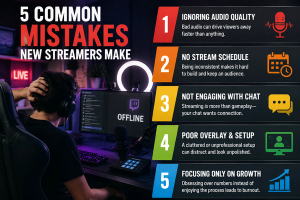
5 Common Mistakes New Streamers Make
Streaming has become one of the biggest forms of online entertainment, with platforms like Twitch, YouTube, and Kick allowing creators to build communities, share content, and even turn streaming into full-time careers. But while starting a stream is easier than ever, growing an audience is much harder than many beginners expect.
A lot of new streamers focus only on equipment or follower counts while overlooking the habits and strategies that actually help channels grow. Building a successful stream usually takes consistency, patience, and understanding how online audiences behave.
Here are five common mistakes new streamers make, and why avoiding them can make a huge difference.
Key Takeaways
- Consistency matters more than streaming for extremely long hours.
- Audience engagement is often more important than gaming skill.
- Growth rarely happens overnight, even for talented creators.
- Stream quality includes personality and interaction, not just equipment.
- Successful streamers usually create content beyond livestreaming itself.
1. Streaming Without Talking
One of the biggest beginner mistakes is staying quiet while streaming, especially when few viewers are watching. Many new streamers feel awkward talking without an active chat, but silence makes streams much less engaging for potential viewers who stop by.
Successful streamers constantly narrate what they’re doing, react to gameplay, share opinions, tell stories, or comment on current topics. Even if nobody is actively chatting yet, speaking regularly creates a more welcoming atmosphere.
New viewers are far more likely to stay when the stream already feels active and energetic.
2. Focusing Too Much on Expensive Equipment
Many beginners believe they need professional cameras, high-end microphones, RGB lighting, and expensive setups before they can start streaming successfully.
While decent audio quality is important, personality and entertainment value matter far more than having the perfect setup. Plenty of successful creators began with basic equipment and upgraded gradually as their audiences grew.
Waiting for the “perfect setup” often becomes an excuse that delays actually creating content and gaining experience.
3. Streaming for Too Many Hours
A common misconception is that streaming longer automatically leads to faster growth. In reality, streaming for extremely long hours with low energy often hurts content quality and leads to burnout.
Many successful streamers focus more on consistency and entertainment value than endless streaming sessions. A shorter, engaging stream is usually more effective than staying live for ten hours without energy or interaction.
Burnout is one of the biggest reasons new streamers quit early.
4. Ignoring Content Outside the Stream
Modern streaming growth rarely comes from livestreaming alone. Platforms like TikTok, YouTube Shorts, Instagram Reels, and Twitter play a huge role in helping creators get discovered.
Many new streamers make the mistake of only going live without creating clips, highlights, or short-form content that can reach wider audiences.
Successful streamers often grow because viewers first discover them through viral clips or social media content before ever joining a livestream.
Streaming itself is only one part of building an online presence.
5. Copying Bigger Streamers Too Closely
It’s normal for beginners to look up to popular creators, but copying large streamers too directly can make channels feel generic and forgettable.
Viewers are usually drawn to creators with unique personalities, humor, opinions, or content styles. Trying too hard to imitate someone else often prevents new streamers from developing their own identity.
The most memorable creators stand out because audiences feel they’re authentic and original.
Conclusion
Starting a streaming career can look exciting from the outside, but building an audience takes far more than simply going live. Many new streamers struggle because they focus on numbers, expensive gear, or long hours instead of engagement, consistency, and personality.
The creators who grow successfully are often the ones who stay patient, adapt over time, and focus on building genuine connections with their communities.
In the end, streaming success is rarely about perfection, it’s about creating content people actually enjoy spending time with.